
What Is the Point of Pavement Management?
Here's the uncomfortable truth about roads: by the time someone complains about them, you've probably already missed the cheap fix.
This is the lag problem. Road deterioration doesn't announce itself. A road can look perfectly serviceable while the structural layers underneath are quietly failing. The visible cracking, potholing, and roughness that finally prompts a complaint — or a council meeting — represents the end of a long process, not the beginning. At that point, your maintenance options are limited and expensive.
This is why "the roads seem fine" is one of the most dangerous things a Public Works Director can hear. It usually means one of two things: either the roads actually are in good shape (great), or you're in the early-quiet phase of a deterioration curve that's about to get steep (not great). The two are nearly indistinguishable from the windshield.
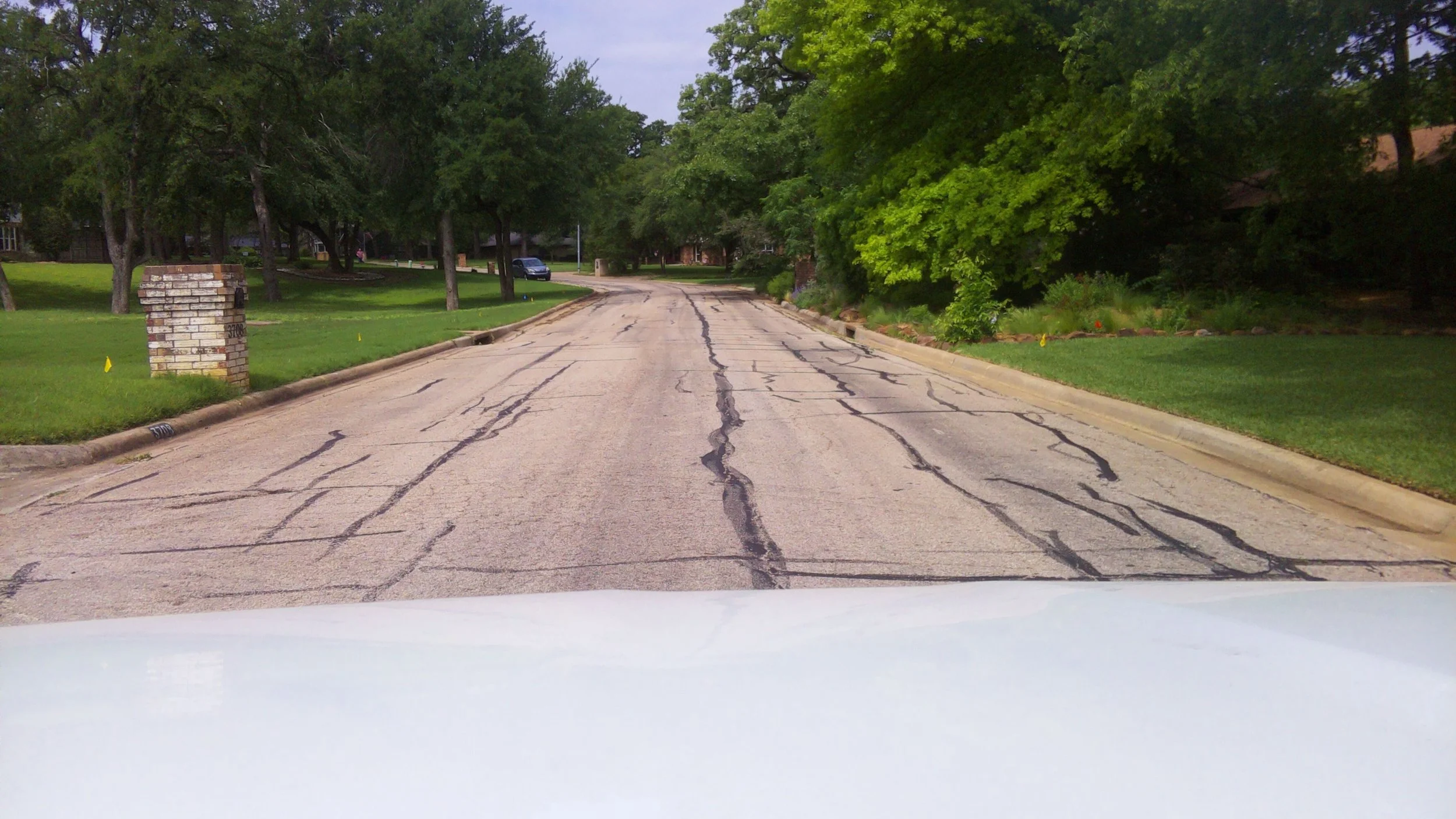
PCI — the Pavement Condition Index — exists to solve exactly this problem. It's a structured way to see what a drive-by can't. But it's worth being clear about what PCI actually is: a snapshot of surface distresses, not a direct measure of structural health. It's a proxy. A useful one, but still a proxy. A road can carry a decent PCI score and still be approaching the inflection point where maintenance costs spike.
The real goal of pavement management isn't to optimize a number. It's to keep your network on the right side of that inflection point — spending maintenance dollars while they're still efficient, before roads cross into reconstruction territory.
That means spending money on roads that don't obviously need it yet. That's a hard conversation with a City Council or a frustrated resident pointing at a different street. But it's the job. Pavement management is fundamentally a timing problem: intervene early and a modest budget can maintain a healthy network. Wait until it's obvious, and no budget is ever enough.
The data exists to tell you where you are on that curve. Using it is the point.
Every road network is different. If you want to walk through what this looks like for your city specifically, reach out — that's exactly the kind of analysis we do at GoodRoads.