
How to Explain the Pavement Deterioration Curve to an Elected Official
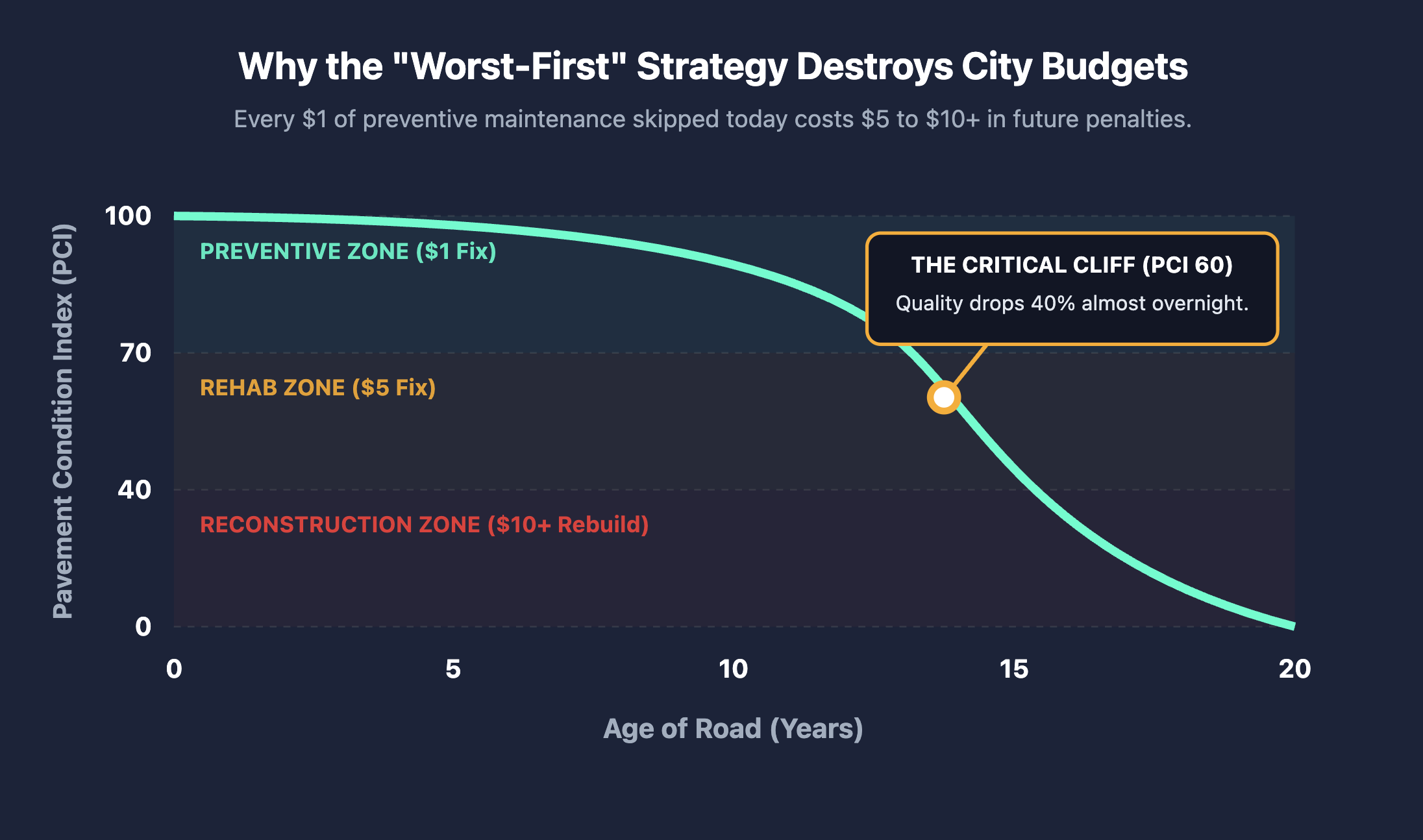
Layout the math clearly: Every $1 we fail to spend on a road in "Good" condition today will cost us $5 to $10 to fix in just a few years.
The PCI Plateau: Why Some Cities Pay Twice as Much Just to Stand Still
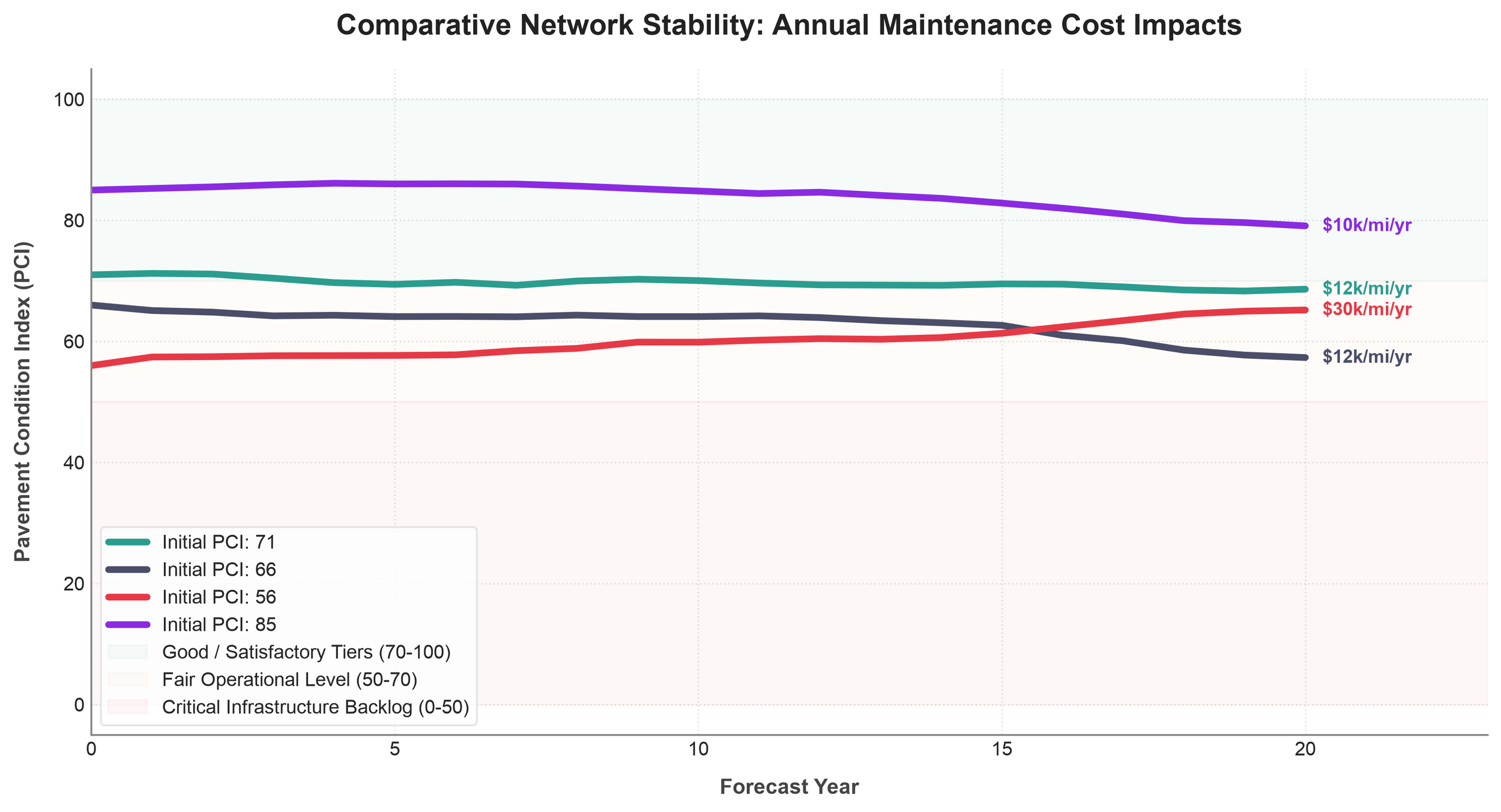
In past posts, we looked at the pavement aging curve and the role it plays in how much it costs to move, or even just hold, a city's average PCI. The natural assumption, and the one we started with, is that the relationship is continuous: the lower your PCI, the more it costs to maintain, scaling up steadily as you climb. We ran the actual numbers on four real city networks to test that assumption. It turned out to be wrong, in a way that's more useful than the original assumption would have been.
What Is the Point of Pavement Management?
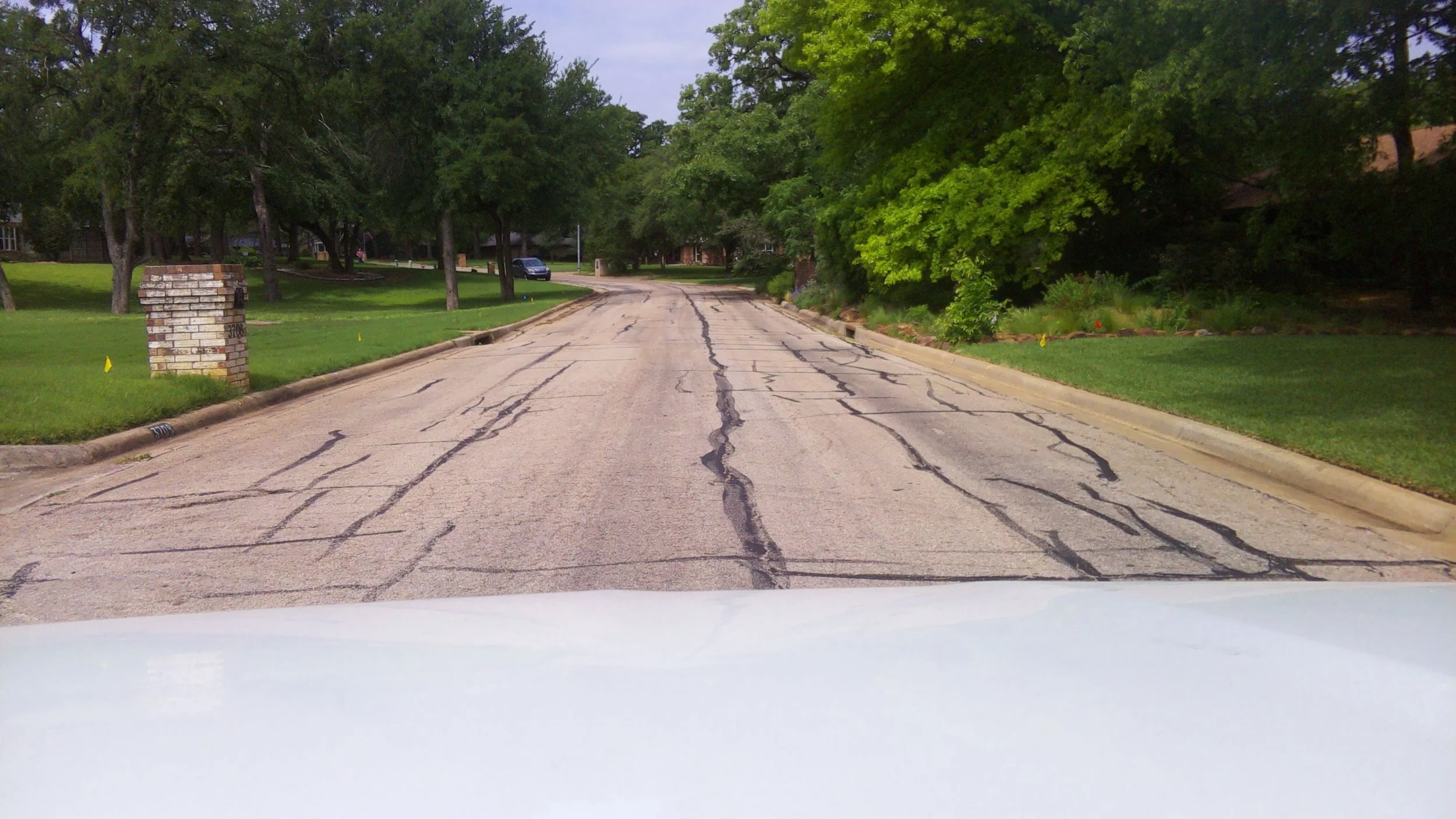
The real goal of pavement management isn't to optimize a number. It's to keep your network on the right side of that inflection point — spending maintenance dollars while they're still efficient, before roads cross into reconstruction territory.
When You Can't Afford to Fix Everything: How to Triage Your Road Network
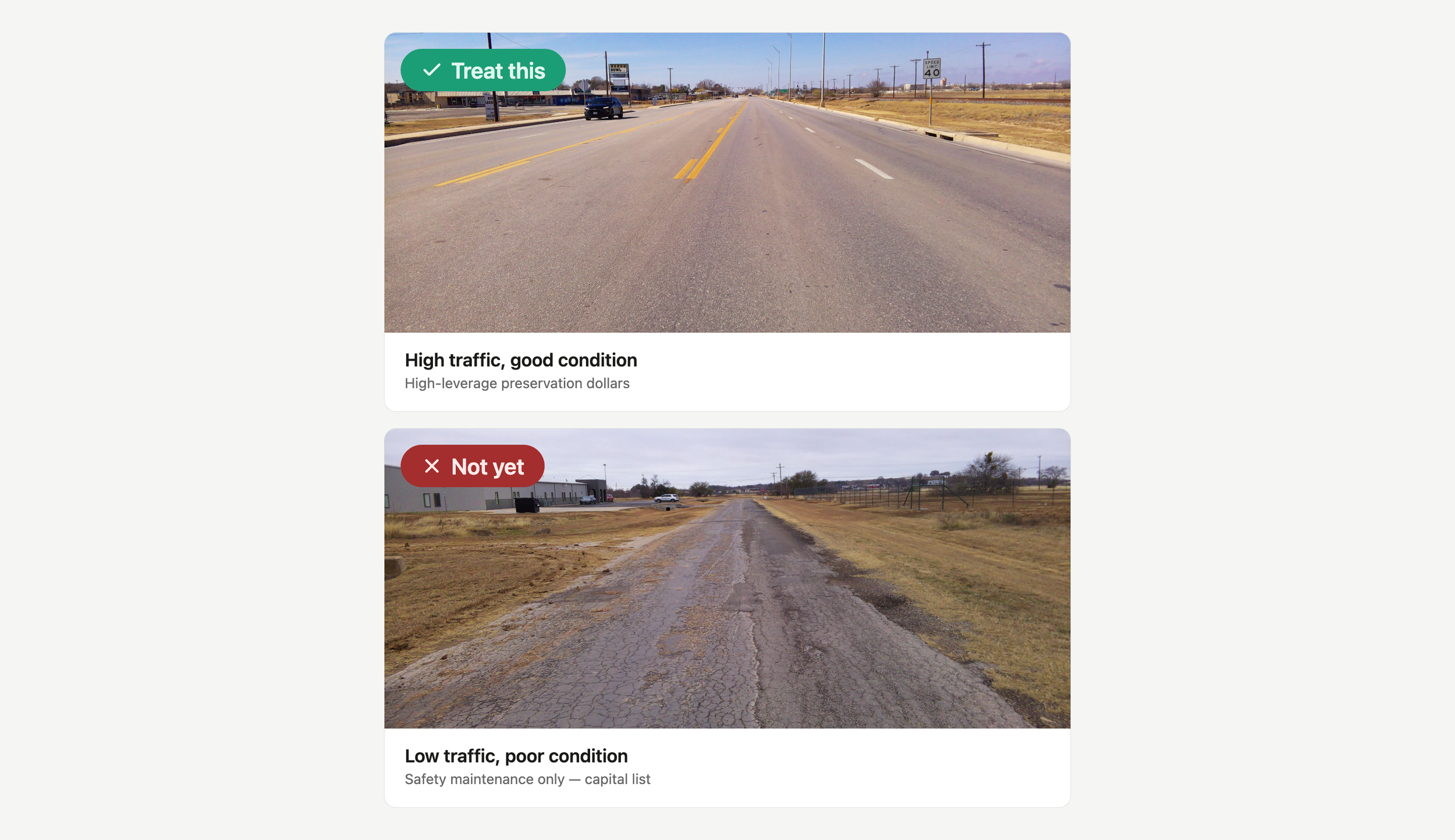
Most pavement management advice assumes you have enough budget to do the math properly. But many city managers I talk to are looking at a budget that covers maybe half of what their network needs, and they want to know: where do I put the money?
The answer isn't your worst roads. It's the roads where your dollars protect the most value. Those are different things, and confusing them is how cities spend their entire paving budget on roads that were already too far gone to save.