
Beyond the Potholes: Why We’re Making Our Road Data Public
“My street looks fine; why did they just pave it?”
“My street looks like crap; why hasn’t it been paved?”
In my years working in city engineering, I’ve been accused of everything from forging documents to colluding with contractors (none of it true). It’s an intense job because everyone has an opinion on the road in front of their house. Yet, I found that nearly 100% of the time, I could solve the conflict by simply having an empathetic conversation.
I remember one resident who was convinced something "shady" was happening with the maintenance we did on his street. After thirty minutes of listening to his concerns and educating him on how we objectively select roads, his entire demeanor changed. He didn't just stop being angry—he offered to explain the process to his neighbors so they wouldn't call to complain. He just wanted to be "in the loop."
The Public Portal: Information for Everyone
We know pavement managers can’t spend thirty minutes on the phone with every resident. That’s why we’ve launched a Public Portal. It’s designed to give you the same data-driven "loop" that the gentleman in my story valued so much.
How to Use the Map
Our new map (pictured below) removes the "black box" of city planning. Instead of wondering if a street was picked because of politics, you can see the objective data:
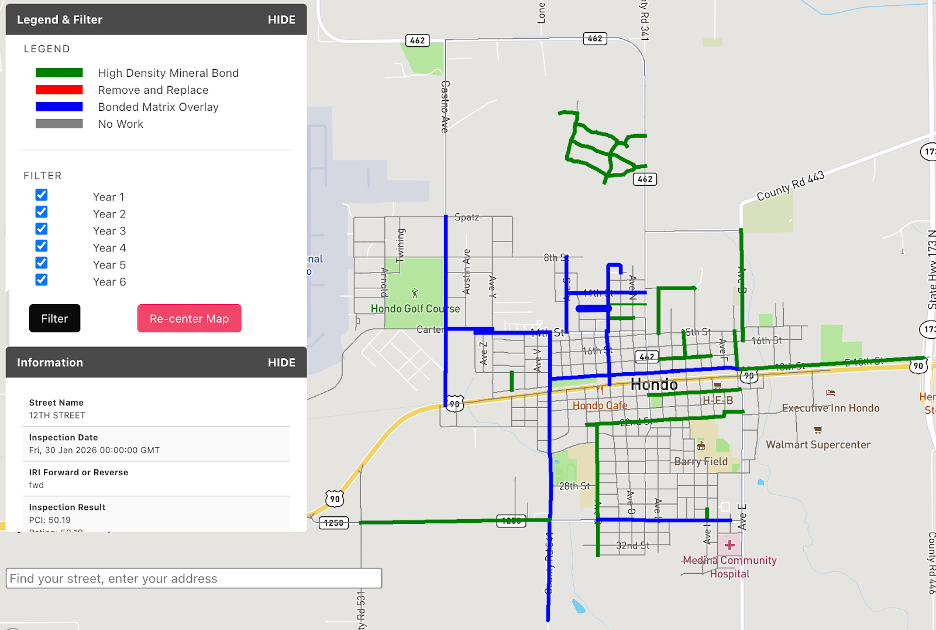
Our Public Map is interactive, designed to answer common questions from citizens - happier, informed citizens, focused and empowered Public Works staff
The Legend: We use specific treatments based on a road's needs. Color coding makes it easy to see the difference. This is fully and easily customizable.
The Timeline: You can filter by Year to see exactly when your neighborhood is scheduled for work.
The "Why": Click on any street to see its PCI (Pavement Condition Index). This is a 0–100 score that tells you exactly how healthy that pavement is.
The “How”: It’s easily embeddable on your City’s website and even offers a “find my street/address” feature for citizens. Pair it with a brief explanation of your City’s approach to pavement maintenance and Viola! you have an effective street maintenance webpage!
A Shared Responsibility
If you're wondering why a "good" road is getting a treatment while a "bad" one waits, it usually comes down to pavement preservation—a topic I covered in my Hidden Cost of Bad Roads post. By catching roads before they fail, we save millions in taxpayer dollars.
We believe that while the city is responsible for maintaining the roads, we all use them and should share the responsibility of understanding how they are managed. We invite you to find your street on the map, check its score, and see the plan.
Transparency isn't just about showing the work; it’s about building a partnership between the city and the people who drive its streets every day.
Ready to turn your "angry calls" into informed partners? Contact us at GoodRoads to learn how our public portal can streamline your resident communication and bring transparency to your infrastructure projects.